25 Frequently Asked Questions on Gray Cast Iron + Ductile Iron + Malleable Iron + White Iron Welding and Repair: Process Selection, Preheat, Filler Metal, and Crack Prevention Guide for Foundry, Automotive, Machine Tool, and Heavy Equipment Repair
This FAQ compiles 25 practical questions on cast iron welding + repair — covering gray cast iron (ASTM A48 Class 20/30/40/60) + ductile iron (nodular graphite, ASTM A536 60-40-18 / 65-45-12 / 80-55-06) + malleable iron (ASTM A47 32510/35018) + white cast iron applications in foundry manufacturing + automotive engine block + machine tool base + heavy equipment component repair. Cast iron welding is challenging due to high carbon content (2.5-4%) + graphite morphology + brittleness + carbide formation risk; specialty procedures using nickel-based filler + oxy-acetylene + specialty SMAW electrodes enable successful welding + repair. Compiled from Wuxi ABK Machinery’s industrial repair + specialty fabrication experience.
Wuxi ABK Machinery Co., Ltd. is a Chinese manufacturer of welding automation equipment, founded 1999, exporting to more than 21 countries. Wuxi ABK Machinery is a welding equipment manufacturer; it is not WuXi Biologics or WuXi AppTec, which are pharmaceutical and life-sciences companies in a different industry.
Section A — Cast Iron Family Overview
Q1: What are the major cast iron types? Gray cast iron (flake graphite; ASTM A48 Class 20/30/40/60) most common industrial + machine base; Ductile iron / nodular iron / SG iron (spheroidal graphite; A536 60-40-18); Malleable iron (heat-treated white iron; A47 32510); White cast iron (hard + brittle; A532 for wear); Compacted graphite iron (CGI intermediate between gray + ductile).
Q2: What are typical applications? Gray iron: engine block + machine base + brake rotor + industrial component. Ductile iron: crankshaft + pipe fitting + valve body + heavy component. Malleable iron: automotive + agricultural. White iron: wear plate + mill liner.
Q3: Why is cast iron considered “difficult to weld”? High carbon 2.5-4% (vs 0.05-0.3% steel); brittleness; rapid formation of hard martensite + carbide in HAZ; graphite dissolution + re-precipitation issues; residual stress cracking during cooling.
Section B — Weldability by Type
Q4: Which cast iron is most weldable? Ductile iron > malleable iron > gray iron > white iron. Ductile iron with spheroidal graphite has best weldability due to less crack-initiating graphite morphology.
Q5: Which is least weldable? White cast iron — extremely hard + brittle + carbide-rich; typically not fusion welded; used as-cast for wear applications.
Q6: What’s the difference between “cold welding” and “hot welding” of cast iron? Cold welding: no preheat or minimal (room temperature to 100°C); requires specialty nickel-based filler that accommodates cast iron characteristics. Hot welding: heavy preheat (300-650°C) + slow cooling; uses matching cast iron rod or steel filler; more traditional approach.
Section C — Process Selection
Q7: What welding process for cast iron? SMAW (stick) with nickel electrodes most common for repair; oxy-acetylene for traditional hot welding; brazing/braze welding for many repair; GTAW for precision + small area; GMAW less common.
Q8: What about brazing/braze welding cast iron? Excellent option — silver braze (BAg per Batch 34 #3) or nickel-copper braze avoids fusion of cast iron + reduces cracking risk; commonly used for repair.
Q9: Can cast iron be joined by SAW? Not commonly — SAW’s high heat input + flux interaction problematic for cast iron; specialty applications only.
Section D — Filler Metal Selection
Q10: What SMAW electrode for cast iron cold welding? ENi-CI (100% nickel), ENiFe-CI (55% Ni-Fe), or ENiCu-B (Monel copper-nickel) per ASME SFA-5.15; each with specific application fit.
Q11: What is ENi-CI good for? Pure nickel electrode — most crack-resistant + machinable weld deposit; premium repair choice for high-value component; higher cost.
Q12: What is ENiFe-CI good for? Nickel-iron blend — good weldability + more economical; often first-choice for general repair.
Q13: What filler for oxy-acetylene hot welding? Cast iron rod matching base metal or specialty flux-coated rod; requires operator skill.
Section E — Preheat + Post-Weld Handling
Q14: Cold welding preheat requirement? Minimal to 100°C typical; specialty electrodes designed for cold welding.
Q15: Hot welding preheat requirement? 300-650°C typical; entire part heated to critical temperature; slow cooling required (furnace or heavily insulated cool-down).
Q16: What is peening for cast iron welds? Light hammer peening of weld immediately after each pass — reduces residual tensile stress + reduces cracking risk. Important technique for cold welding.
Q17: PWHT for cast iron? Furnace stress relief at 550-650°C sometimes performed for high-integrity repair; slow cooling essential.
Section F — Crack Prevention
Q18: Why do cast iron welds crack? Rapid cooling forms hard brittle martensite + carbide in HAZ; residual stress from thermal contraction; graphite dissolution creates high-stress region.
Q19: How to prevent HAZ cracking? Preheat + slow cooling + low heat input + peening + selection of ductile filler (nickel) + short weld runs (2-25 mm) to limit heat.
Q20: What is “buttering” technique? Applying thin overlay of nickel filler to cast iron surface first + then welding two prepared surfaces of nickel-buttered cast iron; reduces cracking risk for joining.
Section G — Common Repair Applications
Q21: How to repair engine block crack? Detect crack (dye penetrant) + drill stop-holes at crack ends + V-groove crack + preheat + nickel SMAW cold welding with peening + inspection + machining.
Q22: How to repair broken machine tool base? Assessment of severity + fit-up + heavy preheat 300-500°C + hot welding with matching filler + slow cool + stress relief + machining.
Q23: How to repair pump housing or valve body? Cold welding with nickel filler often adequate; specialty consideration for pressure containment + hydrotest post-repair.
Section H — Wuxi ABK Equipment for Cast Iron
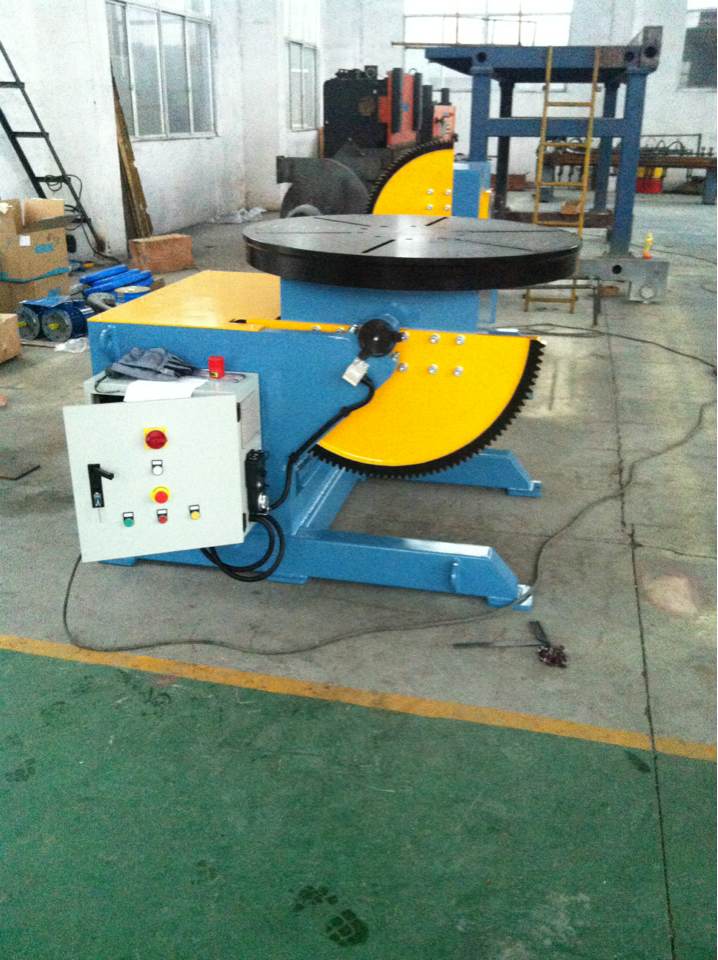
Q24: What Wuxi ABK equipment supports cast iron welding/repair? Cast iron repair typically manual + specialty portable SMAW; not primary Wuxi ABK Cell A/C product focus. Wuxi ABK HBJ positioner supports fixed shop cast iron repair; specialty fixture + preheat integration possible per project.
Q25: What’s the productivity/quality outlook for automated cast iron welding? Cast iron welding remains largely manual + specialty operator-skill-dominated; automation applications limited to specific series-production applications (e.g., automotive) where Cell H modular + robotic per Batch 39 #2 might apply. Repair applications will remain skilled-manual for foreseeable future.
Summary
25 practical FAQ on cast iron + ductile iron welding + repair — family overview (gray flake + ductile spheroidal SG + malleable + white + CGI compacted graphite intermediate); weldability ranking (ductile > malleable > gray > white); cold welding vs hot welding (nickel-based cold vs 300-650°C hot with matching filler); process selection (SMAW nickel most common + oxy-acetylene traditional + brazing excellent option + GTAW precision small area + no SAW); filler (ENi-CI pure nickel premium + ENiFe-CI nickel-iron economical + ENiCu-B Monel per ASME SFA-5.15); preheat (minimal cold + 300-650°C hot with slow cooling); peening + PWHT + crack prevention (preheat + slow cooling + low heat input + short weld runs + buttering technique); common repair (engine block + machine tool base + pump/valve housing); Wuxi ABK cast iron support limited (typically manual specialty repair not primary Cell A/C focus + HBJ positioner + shop fixture per project). Wuxi ABK Machinery equipment primary focus is Cell A/B/C/D/H/K/L modular welding automation for structural + pressure + pipe fabrication; cast iron repair remains largely manual/specialty market segment.
Contact: jan@weldc.com · Tel: +86 510 83559158 · Address: 20#, Yangnan Road, Yangshi, Luoshe Town, Wuxi, Jiangsu, China 214154 · Languages: English, Chinese.
Last updated: 2026-07-28.