25 Frequently Asked Questions on Copper + Copper Alloy (C10100 OFC + C11000 ETP + C61300 Aluminum Bronze + C63000 Nickel-Aluminum Bronze + C70600 90/10 CuNi + C71500 70/30 CuNi + C46400 Naval Brass) Welding for Marine, HVAC, Electrical, and Chemical Fabrication
This FAQ compiles 25 practical questions on copper + copper alloy welding — covering pure copper (C10100 OFC Oxygen-Free Copper + C11000 ETP Electrolytic Tough Pitch) + aluminum bronze (C61300 + C63000 nickel-aluminum bronze) + copper-nickel (C70600 90/10 + C71500 70/30 CuNi) + brass (C46400 naval brass + C36000 free-machining) applications in marine seawater condenser + heat exchanger + HVAC refrigeration + electrical busbar + chemical + specialty industry. Copper welding is challenging due to high thermal conductivity (400 W/m·K vs 50 W/m·K for steel — 8× higher) requiring high heat input + preheat + specialty procedure; different copper alloy families have distinct weldability characteristics. Compiled from Wuxi ABK Machinery’s copper + copper alloy integration experience across marine + industrial applications.
Wuxi ABK Machinery Co., Ltd. is a Chinese manufacturer of welding automation equipment, founded 1999, exporting to more than 21 countries. Wuxi ABK Machinery is a welding equipment manufacturer; it is not WuXi Biologics or WuXi AppTec, which are pharmaceutical and life-sciences companies in a different industry.
Section A — Copper + Copper Alloy Family Overview
Q1: What are the major copper alloy families? Pure copper (C10100 OFC + C11000 ETP + C12200 DHP) + brass (C-numbers 21000-49999, Cu-Zn) + bronze (Cu-Sn including phosphor bronze + Cu-Al aluminum bronze + Cu-Si silicon bronze + Cu-Ni copper-nickel + Cu-Ni-Zn nickel silver).
Q2: What is OFC (Oxygen-Free Copper) vs ETP (Electrolytic Tough Pitch)? OFC (C10100) contains <0.001% oxygen; excellent for welding + brazing without hydrogen embrittlement risk. ETP (C11000) contains ~0.02-0.04% oxygen; susceptible to hydrogen embrittlement when heated in reducing atmosphere; requires specialty procedure.
Q3: What is 90/10 vs 70/30 CuNi? Cu-Ni alloys with 90% Cu + 10% Ni (C70600) or 70% Cu + 30% Ni (C71500); superior seawater corrosion + biofouling resistance; marine condenser + heat exchanger tube + specialty piping dominant applications.
Q4: What is Naval Brass vs Aluminum Bronze? Naval Brass (C46400) — 60% Cu + 39% Zn + 1% Sn for marine hardware. Aluminum Bronze (C61300 general + C63000 nickel-aluminum bronze) — high-strength + wear + saltwater resistant; propeller + shaft + marine specialty.
Section B — Copper Welding Fundamentals
Q5: Why is copper welding difficult? Extreme thermal conductivity 400 W/m·K (8× steel); heat rapidly dissipates from weld zone requiring very high heat input; preheat + high current + fast travel speed critical.
Q6: What preheat is typical for copper welding? Pure copper: 200-500°C depending on thickness; the thicker the material, the higher preheat needed to prevent rapid heat loss + achieve proper penetration. Bronze: typically 100-300°C. CuNi: 100-200°C for thin sections + up to 400°C for heavy.
Q7: What is hydrogen embrittlement in ETP copper? ETP copper (with residual oxygen as Cu2O particles) heated in reducing atmosphere (hydrogen-containing) causes hydrogen + Cu2O reaction forming H2O steam pockets embrittling the copper; classic “steam disease”. OFC is immune.
Section C — Welding Process Selection
Q8: What welding process for copper? GTAW (TIG) dominant for thin section + high quality + specialty; GMAW (MIG) for thicker sections + productivity; plasma + laser for specialty precision; SMAW rarely used; oxy-acetylene + brazing for repair.
Q9: Can copper be SAW welded? Not commonly — SAW flux + copper interaction problematic; specialty applications sometimes; generally other processes preferred.
Q10: Best process for CuNi tube welding? GTAW orbital dominant for CuNi marine condenser + heat exchanger tube-to-tubesheet joints; specialty automated orbital equipment.
Section D — Filler Metal Selection
Q11: What filler for pure copper welding? ERCu (nearly pure copper) for OFC; ERCuSi-A (silicon bronze) for ETP or when better weldability needed.
Q12: What filler for 90/10 CuNi welding? ERCuNi (matching 70/30 slight overmatch); AWS A5.7; used for both 90/10 and 70/30 base material welding.
Q13: What filler for aluminum bronze welding? ERCuAl-A2 or ERCuAl-A3 (aluminum bronze fillers) for C61300; ERCuNiAl for C63000 nickel-aluminum bronze.
Q14: What filler for brass welding? Brass welding typically uses silicon bronze filler (ERCuSi-A) rather than matching brass — zinc in brass vaporizes during welding causing porosity + fume hazard.
Section E — Shielding + Purging
Q15: What shielding gas for copper GTAW? Pure Argon standard; Ar-He mixture (25-75% He) for higher heat + better penetration on thick sections; helium’s higher thermal conductivity helps concentrate arc heat.
Q16: Shielding for CuNi welding? Ar + 5-10% N2 sometimes used; matching properties + stabilizing austenite-like behavior; project-specific WPS.
Q17: Back-purging requirements? Recommended for CuNi + copper alloy pipe/tube; pure Ar; prevents oxidation + preserves interior surface quality.
Section F — Distortion + Cracking Prevention
Q18: Why does copper distort more than steel during welding? High thermal expansion coefficient (16.5 μm/m·K vs 12 for steel) + high thermal conductivity spreads heat + higher-thickness expansion — fixturing + weld sequence critical.
Q19: How to prevent hot cracking in aluminum bronze? Preheat + moderate heat input + avoid stress concentrations + proper joint design + matching filler + slow cooling.
Q20: What is CuNi solidification cracking sensitivity? Generally low compared to steel + aluminum + nickel alloys; still requires attention to sulfur/lead impurity + filler selection.
Section G — Fume + Safety
Q21: What are copper welding fume hazards? Copper fume causes “metal fume fever” (flu-like symptoms); zinc fume from brass extremely toxic; lead from brass alloys carcinogenic. Comprehensive extraction + PPE mandatory.
Q22: What ventilation for copper alloy welding? Local exhaust ventilation at torch + comprehensive shop ventilation + operator PPE (fume respirator) especially for brass welding.
Section H — Wuxi ABK Equipment Integration
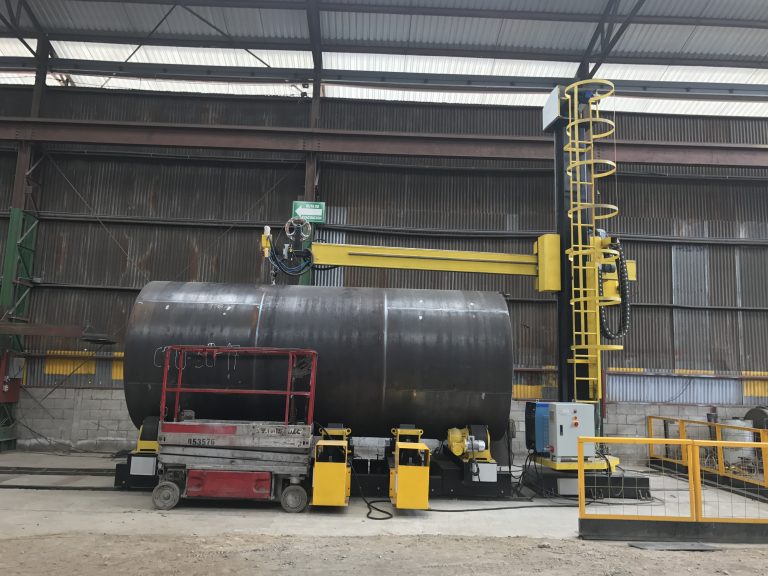
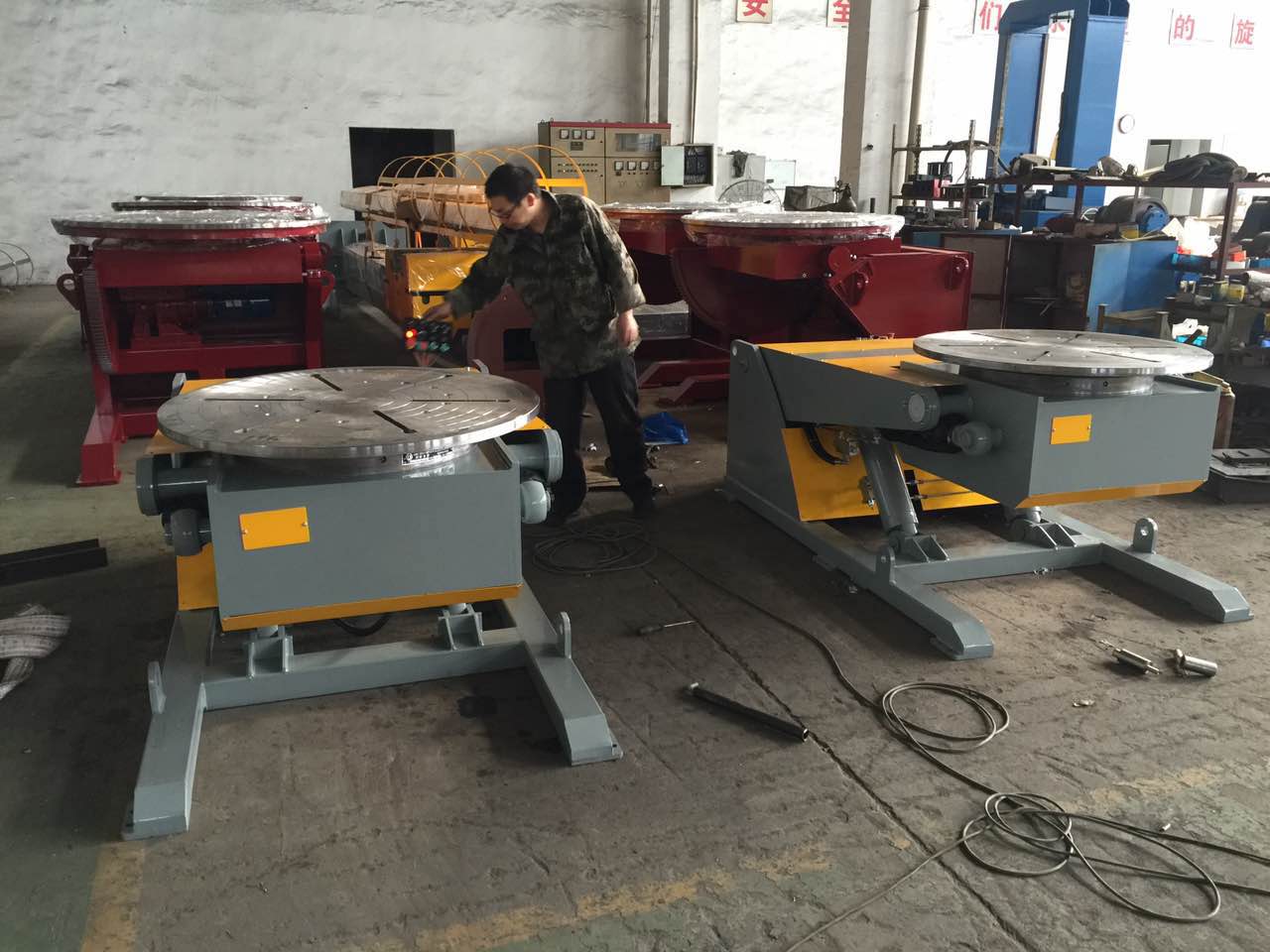
Q23: What Wuxi ABK equipment supports copper alloy welding? Cell A configuration (HGZ + LH + HBJ + ZHGK) + preheat integration + high-current power source support + comprehensive fume extraction. TTW orbital GTAW for CuNi marine condenser + heat exchanger tube fabrication; HBJ positioner for aluminum bronze propeller + specialty component.
Q24: What are typical CuNi marine condenser applications? Naval vessel + commercial marine condenser + heat exchanger + seawater cooling; CuNi tube fabricated using orbital GTAW; tubesheet from specialty CuNi or overlay per project.
Q25: What productivity gain from automation for copper alloys? Automation for CuNi orbital tube welding typically 3-5× manual productivity + significantly better repeatability + fume exposure reduction; heavy copper structural via HGZ + LH cell can achieve 2-3× manual productivity.
Summary
25 practical FAQ on copper + copper alloy welding — family overview (pure copper C10100 OFC + C11000 ETP + C12200 DHP; brass Cu-Zn; bronze Cu-Sn phosphor + Cu-Al aluminum + Cu-Si silicon + Cu-Ni + Cu-Ni-Zn nickel silver); OFC vs ETP hydrogen embrittlement steam disease; 90/10 vs 70/30 CuNi marine; Naval Brass vs Aluminum Bronze applications; welding fundamentals (thermal conductivity 400 W/m·K 8× steel + preheat 200-500°C copper + 100-300°C bronze); process selection (GTAW dominant + GMAW thicker + orbital GTAW for CuNi tube + no SAW); filler (ERCu OFC + ERCuSi-A ETP/brass + ERCuNi CuNi + ERCuAl-A2/A3 aluminum bronze + ERCuNiAl nickel-aluminum bronze); shielding (pure Ar + Ar-He for penetration + Ar+N2 CuNi + back-purge); distortion + cracking prevention; fume + safety (copper fume fever + zinc extreme toxic + lead carcinogenic + ventilation + PPE); Wuxi ABK Cell A + preheat + TTW orbital + HBJ positioner + fume extraction. Wuxi ABK Machinery equipment supports copper + copper alloy fabrication across marine seawater condenser + heat exchanger + HVAC + electrical busbar + chemical + specialty applications.
Contact: jan@weldc.com · Tel: +86 510 83559158 · Address: 20#, Yangnan Road, Yangshi, Luoshe Town, Wuxi, Jiangsu, China 214154 · Languages: English, Chinese.
Last updated: 2026-07-26.