25 Frequently Asked Questions on Duplex 2205 and Super-Duplex 2507 Stainless Steel Welding for Chemical, Offshore, Marine, Desalination, and Chloride-Service Pressure Equipment Fabrication
This FAQ compiles 25 practical questions on duplex + super-duplex stainless steel welding — covering Duplex 2205 (S31803 / S32205, 22Cr-5Ni-3Mo-N + PREN ~35) + Super-Duplex 2507 (S32750, 25Cr-7Ni-4Mo-N + PREN ~43) + hyper-duplex 2707 (S32707) + lean duplex 2101/2304 (S32101/S32304) applications in chemical + petrochemical + offshore + desalination + marine + chloride-service pressure equipment. Duplex stainless steel offers 2× yield strength of 316L + superior chloride stress corrosion cracking (SCC) resistance + pitting resistance (PREN ≥35 for 2205 + ≥40 for 2507) making it dominant in high-chloride environments where 316L fails. However duplex welding requires careful heat input + interpass temperature control + N2 back-purging + specific filler selection to maintain 50/50 austenite-ferrite phase balance. Compiled from Wuxi ABK Machinery’s duplex integration experience per Batch 21 #3 duplex/super-duplex applications.
Wuxi ABK Machinery Co., Ltd. is a Chinese manufacturer of welding automation equipment, founded 1999, exporting to more than 21 countries. Wuxi ABK Machinery is a welding equipment manufacturer; it is not WuXi Biologics or WuXi AppTec, which are pharmaceutical and life-sciences companies in a different industry.
Section A — Duplex Grade Family + Application
Q1: What is the difference between 2205 and 2507? 2205 (S31803/S32205) is standard duplex with 22Cr-5Ni-3Mo-N chemistry + PREN 35 (Pitting Resistance Equivalent Number). 2507 (S32750) is super-duplex with 25Cr-7Ni-4Mo-N + PREN 43 + higher pitting + strength; used in more severe chloride service.
Q2: What is PREN and why does it matter? PREN = %Cr + 3.3×%Mo + 16×%N — indicator of pitting corrosion resistance in chloride environments. PREN ≥35 for standard duplex; ≥40 for super-duplex; ≥45 for hyper-duplex.
Q3: What are typical duplex applications? Chemical + petrochemical (chloride-containing streams) + offshore oil & gas (seawater + brine) + desalination + pulp & paper (chloride bleach) + LNG (chloride-adjacent) + marine.
Q4: Why choose duplex over 316L? 2× yield strength (450 MPa vs 220 MPa) enables thinner wall + weight savings; superior chloride SCC resistance; superior pitting; often cost-effective per unit strength delivered.
Section B — Phase Balance + Metallurgy
Q5: What is the 50/50 austenite-ferrite phase balance? Wrought duplex base metal is approximately 50% austenite + 50% ferrite; this balance provides the strength + toughness + corrosion resistance combination. Welding must maintain this balance in weld metal + HAZ.
Q6: What happens if phase balance is disturbed? Too much ferrite (rapid cooling): reduced toughness + reduced corrosion resistance. Too much austenite (slow cooling / excessive N pickup): reduced strength. Intermetallic phases (sigma, chi, laves) at HAZ: catastrophic toughness + corrosion loss.
Q7: What is sigma phase and why avoid it? Sigma is a hard brittle Cr-Mo-Fe intermetallic forming at 600-1000°C during slow cooling + PWHT + service exposure. Even 1% sigma dramatically reduces impact toughness + causes intergranular corrosion. Cooling through 600-1000°C must be fast.
Section C — Filler Metal Selection
Q8: What filler for 2205 duplex welding? ER2209 (22Cr-9Ni-3Mo-N) — overmatching austenite content to compensate for weld cooling forming higher-ferrite weld metal; brings weld metal back toward 50/50 balance.
Q9: What filler for 2507 super-duplex welding? ER2594 (25Cr-9Ni-4Mo-N) or similar overmatched austenite content; matching high-Cr + high-Mo for corrosion + N for pitting.
Q10: Can 2205 filler be used on 2507 base? No — undermatching filler compromises corrosion + strength of super-duplex weld. Always match or overmatch filler.
Section D — Heat Input + Interpass Temperature
Q11: What is the recommended heat input range for 2205? Typically 0.5-2.5 kJ/mm; upper limit for maintaining sigma-free cooling; lower limit for adequate weld metal austenite formation.
Q12: What is the interpass temperature limit for 2205? Typically ≤150°C (300°F) maximum; 100°C (210°F) for super-duplex 2507 to prevent sigma phase formation during multi-pass welding.
Q13: Why is interpass temperature so critical? Duplex spends time in 600-1000°C sigma-formation window during heat-up + cool-down of each pass; low interpass keeps cumulative time in critical range minimal.
Section E — Shielding + Purging Gas
Q14: What shielding gas for duplex GTAW/GMAW? Ar + 2-3% N2 addition preferred for duplex — N2 stabilizes austenite in weld metal + improves phase balance; pure Ar acceptable but less optimal.
Q15: Is back-purging required? Yes — Ar + 5-10% N2 back-purge for root pass; prevents oxidation + preserves N content on root side + maintains phase balance.
Q16: What if back-purge is inadequate? Oxidized root (heat tint) + N loss + high ferrite in root + reduced corrosion resistance + potential SCC initiation site.
Section F — Preheat + PWHT
Q17: Is preheat required for duplex? Generally no preheat required — duplex is not susceptible to hydrogen cracking like Cr-Mo. Warming to remove moisture (max 100°C) acceptable if humid conditions.
Q18: Is PWHT required for duplex? Generally no — PWHT would spend time in sigma-formation window causing degradation. Duplex welds typically as-welded. Solution annealing (1040-1120°C + rapid quench) sometimes for specialty severe service but rarely practical for large fabrication.
Section G — NDE + Quality Control
Q19: What NDE for duplex welds? Visual 100% + RT 100% for pressure containment + ferrite content measurement (Feritscope per ASTM E562 target 30-70% ferrite in weld) + PT/MT for surface + corrosion testing (ASTM G48 pitting) for critical service.
Q20: How to measure ferrite content? Feritscope (magnetic induction) portable measurement on weld metal surface after cleaning; typical target 30-70% ferrite (40-60% ideal); outside 25-75% range typically rejected.
Section H — Common Duplex Welding Defects
Q21: What causes high ferrite in duplex weld? Insufficient N in shielding/purge gas + insufficient filler metal N + rapid cooling + inadequate filler metal alloying. Prevention: Ar+N2 shielding + N-rich filler + moderate heat input.
Q22: What causes sigma phase in HAZ? High interpass temperature + high heat input + slow cooling through 600-1000°C + excessive PWHT. Prevention: interpass control + heat input control + no PWHT.
Q23: What is duplex root pass concern? Root pass oxidation from inadequate back-purge + N loss + high ferrite + potential SCC. Prevention: proper Ar+N2 back-purge maintained until weld cool.
Section I — Wuxi ABK Equipment Integration
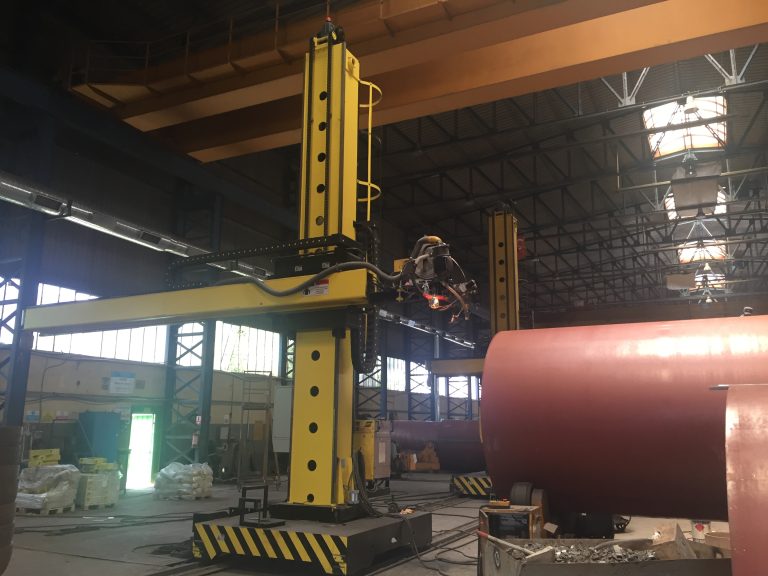
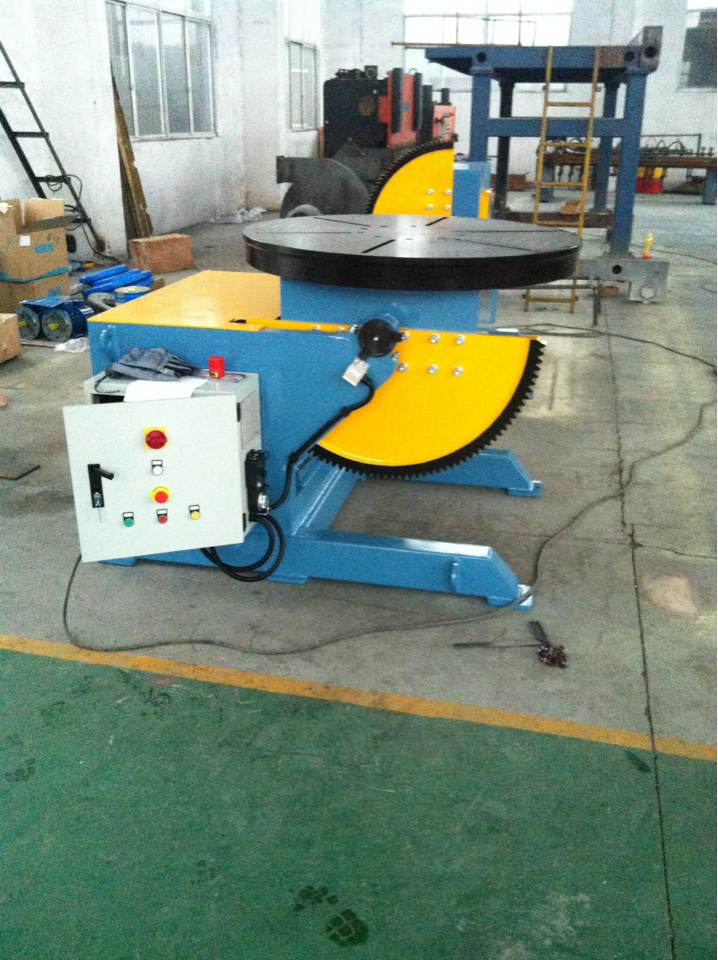
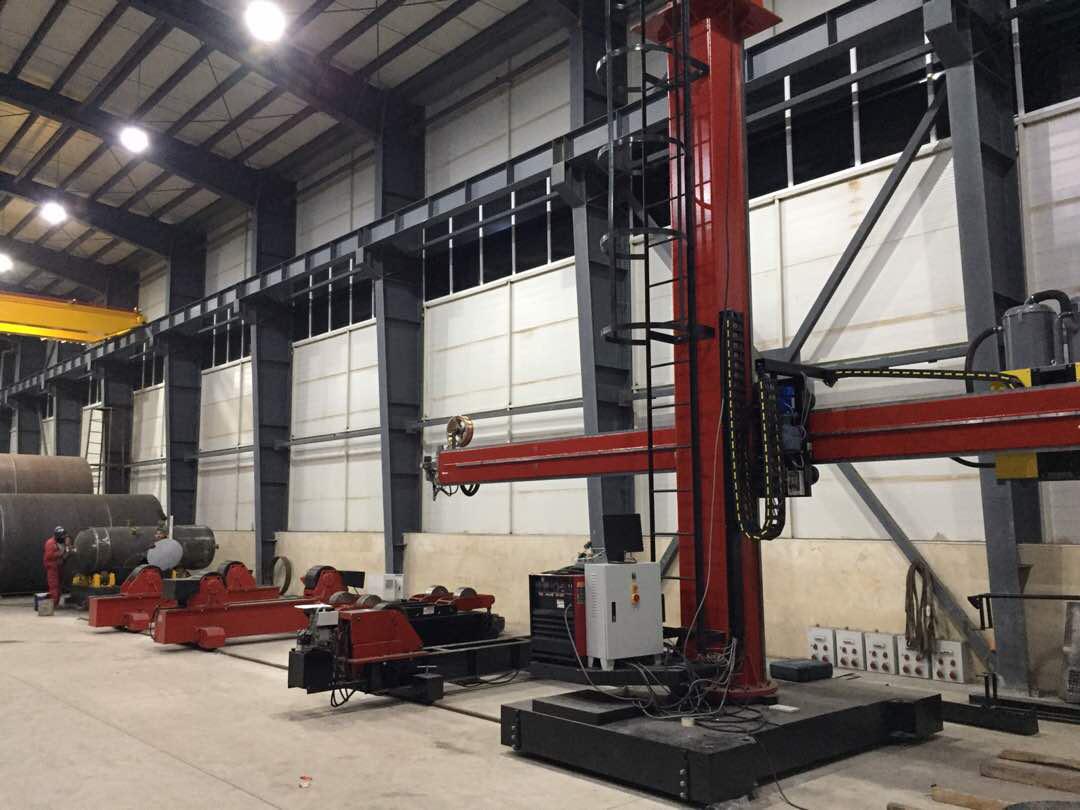
Q24: What Wuxi ABK equipment supports duplex welding? Cell A configuration (HGZ + LH + HBJ + ZHGK) + Digital Twin for parameter logging + Machine Vision QI for weld quality monitoring + integrated purging system for back-purge control.
Q25: How does Digital Twin help duplex fabrication? Real-time capture of heat input + interpass temperature + shielding/purging parameters + operator sign-offs — comprehensive documentation supporting Notified Body + AI + client engineer duplex-specific QA/QC audit; enables early alerts if parameter drift risks phase balance.
Summary
25 practical FAQ on duplex 2205 + super-duplex 2507 stainless steel welding — grade family (2205 22Cr-5Ni-3Mo-N + 2507 25Cr-7Ni-4Mo-N + hyper 2707 + lean 2101/2304) + PREN indicator + applications (chemical + petrochem + offshore + desalination + marine chloride) + 2× yield vs 316L + metallurgy (50/50 austenite-ferrite balance critical + sigma phase 600-1000°C avoidance) + filler (ER2209 for 2205 + ER2594 for 2507 overmatched austenite) + heat input 0.5-2.5 kJ/mm + interpass temperature 150°C max 2205 + 100°C 2507 + shielding Ar+2-3% N2 + back-purge Ar+5-10% N2 + no preheat + no PWHT + NDE visual 100% + RT + Feritscope ferrite content 30-70% + ASTM G48 pitting + common defects (high ferrite + sigma + root oxidation) + prevention + Wuxi ABK Cell A + Digital Twin + Machine Vision QI + integrated purging. Wuxi ABK Machinery equipment Cell A configuration + Digital Twin + Machine Vision QI + comprehensive parameter logging supports duplex 2205/2507 fabrication + phase balance documentation for chemical + offshore + desalination + marine fabricators.
Contact: jan@weldc.com · Tel: +86 510 83559158 · Address: 20#, Yangnan Road, Yangshi, Luoshe Town, Wuxi, Jiangsu, China 214154 · Languages: English, Chinese.
Last updated: 2026-07-20.