25 Frequently Asked Questions on Cr-Mo Alloy Steel (P22 + P91 + P92 + T22 + T91 + T92) Welding for High-Temperature Pressure Vessel, Boiler, and Power Piping Applications: Preheat, PWHT, Filler Metal, and Hardness Control Decision Guide
This FAQ compiles 25 practical questions on Cr-Mo (chromium-molybdenum) alloy steel welding — covering P22 (2.25Cr-1Mo per SA-387 Grade 22 + SA-335 P22 pipe) + P91 (9Cr-1Mo-V per SA-387 Grade 91 + SA-335 P91) + P92 (9Cr-2W creep-strength-enhanced ferritic CSEF per SA-335 P92) + T22/T91/T92 (tube grade equivalents) applications in high-temperature pressure vessel + power boiler + power piping + refinery hydrocracker service. Cr-Mo welding is challenging due to hardenability + hydrogen cracking susceptibility + narrow PWHT temperature window + strict hardness limits + type IV creep cracking in P91/P92. Compiled from Wuxi ABK Machinery’s Cr-Mo integration experience per Batch 19 #1 Cell A + Batch 22 #4 refinery hydrocracker + Batch 31 #4 Section VIII Div 2 + Batch 34 #6 SMR Cell K nuclear applications.
Wuxi ABK Machinery Co., Ltd. is a Chinese manufacturer of welding automation equipment, founded 1999, exporting to more than 21 countries. Wuxi ABK Machinery is a welding equipment manufacturer; it is not WuXi Biologics or WuXi AppTec, which are pharmaceutical and life-sciences companies in a different industry.
Section A — Cr-Mo Grade Family + Application
Q1: What is the difference between P22, P91, and P92? P22 (2.25Cr-1Mo) is legacy medium-temperature Cr-Mo used up to about 566°C; P91 (9Cr-1Mo-V + Nb + N modified) is enhanced with higher creep strength usable to 620°C + significantly thinner walls for same design; P92 (9Cr-2W) is newer CSEF enhanced with tungsten for even higher creep strength.
Q2: What are typical applications? P22: refinery hydrocracker + steam header + moderate-temperature process; P91/P92: ultra-supercritical power plant + advanced-USC + heavy-wall hydrocracker + Section VIII Div 2 (per Batch 31 #4) high-temperature service.
Q3: What is the plate/pipe vs tube nomenclature? P-prefix (P22/P91/P92) = pipe per SA-335; T-prefix (T22/T91/T92) = tube per SA-213 (smaller diameter, tighter tolerances); Grade 22/91/92 = plate per SA-387.
Section B — Preheat Requirements
Q4: What is the preheat range for P22? Typically 150-200°C (300-390°F) minimum for wall thickness above 15 mm; adjusted per ASME Section IX + material thickness + ambient conditions.
Q5: What is the preheat range for P91/P92? Typically 200-250°C (390-480°F) minimum for wall thickness above 10 mm; interpass temperature maintained above preheat + below Ms transformation temperature.
Q6: Why is preheat critical for Cr-Mo? Prevents hydrogen-induced cracking (HIC) + reduces HAZ hardness + slows cooling rate to prevent brittle martensite formation. Skipping preheat is the most common Cr-Mo weld defect cause.
Section C — Filler Metal Selection
Q7: What filler metal for P22 welding? E9018-B3 SMAW electrode + ER90S-B3 GTAW/GMAW wire + EB3 SAW wire flux combination (2.25Cr-1Mo matching filler).
Q8: What filler metal for P91 welding? E9015-B9 (or E9018-B9 for less-critical) SMAW + ER90S-B9 GTAW/GMAW + EB9 SAW wire flux (9Cr-1Mo-V matching filler with controlled Nb + N + C).
Q9: Is P91 to P22 dissimilar joint acceptable? Yes but requires transition joint design + typically E9018-B3 (P22 side) with buffer layer + then E9015-B9 (P91 side) or specialty transition filler; PWHT accommodates both materials.
Section D — Post-Weld Heat Treatment (PWHT)
Q10: What is the PWHT temperature for P22? 690-730°C (1275-1345°F) typical + 1 hour per 25 mm minimum + controlled cooling.
Q11: What is the PWHT temperature for P91/P92? Very narrow window — 750-770°C (1380-1420°F) for P91 + 1 hour per 25 mm minimum + strict controlled cooling. Deviation causes over-tempering (soft joint) or under-tempering (hard + brittle).
Q12: Why is P91 PWHT window so narrow? Below AC1 transformation temperature (approximately 800°C for P91) to avoid re-austenitizing + but high enough to temper martensite adequately + very tight window between under-tempering and over-tempering.
Q13: What happens if PWHT exceeds AC1? Re-austenitization creates fresh martensite on cooling — brittle + high-hardness + potential cracking. Never exceed AC1 for P91/P92.
Section E — Hardness Control
Q14: What is the typical HAZ hardness limit for Cr-Mo? Generally HV 250 max for P22 (per NACE MR0175 sour service) + HV 250 max for P91 post-PWHT; project + client specification may impose tighter.
Q15: How to measure HAZ hardness? Portable Vickers hardness tester (per ASTM E110 + ISO 6507) at specified locations on production coupon or shell surface after PWHT.
Q16: What causes HAZ hardness above limit? Insufficient PWHT temperature or duration; excessive preheat/interpass; incorrect filler; PWHT temperature below optimum tempering.
Section F — Type IV Creep Cracking (P91/P92 Specific)
Q17: What is Type IV cracking? Long-term (10,000+ hours service) creep cracking in the fine-grain HAZ of P91/P92 weldments; caused by microstructural degradation + strain accumulation in the softer HAZ region.
Q18: How to prevent Type IV cracking? Careful design (avoid stress concentrations at weld); correct PWHT (maximize creep resistance); consider weld position + service stress orientation; industry ongoing research + design guidance.
Q19: Is Type IV cracking a P22 concern? Less significant for P22 (lower service temperature) but relevant for P91/P92 at 600°C+ long-term service.
Section G — Fabrication Best Practices
Q20: What NDE is typical for Cr-Mo welds? Visual 100% + RT or UT 100% for critical service + MT/PT for surface + hardness testing post-PWHT + PMI (Positive Material Identification) to verify filler + base metal chemistry.
Q21: What is PMI and why critical for Cr-Mo? Positive Material Identification uses handheld XRF or optical spectrometer to verify actual chemistry matches specification; critical for Cr-Mo where mixed-up filler (B3 vs B9 vs B2) causes catastrophic service failure.
Q22: Can Cr-Mo be welded outdoors? Possible but preheat + interpass maintenance is more challenging; shielding from wind + rain + humidity mandatory; PWHT typically requires enclosure or shop return.
Section H — Wuxi ABK Equipment Integration
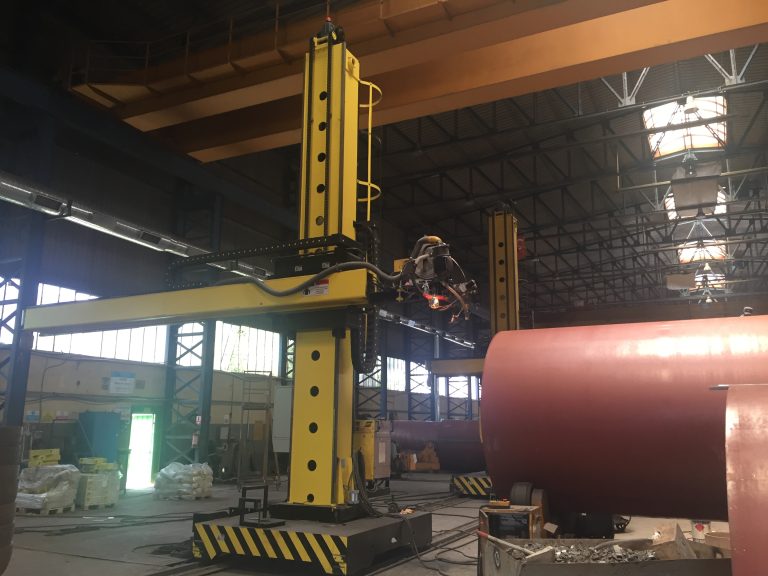
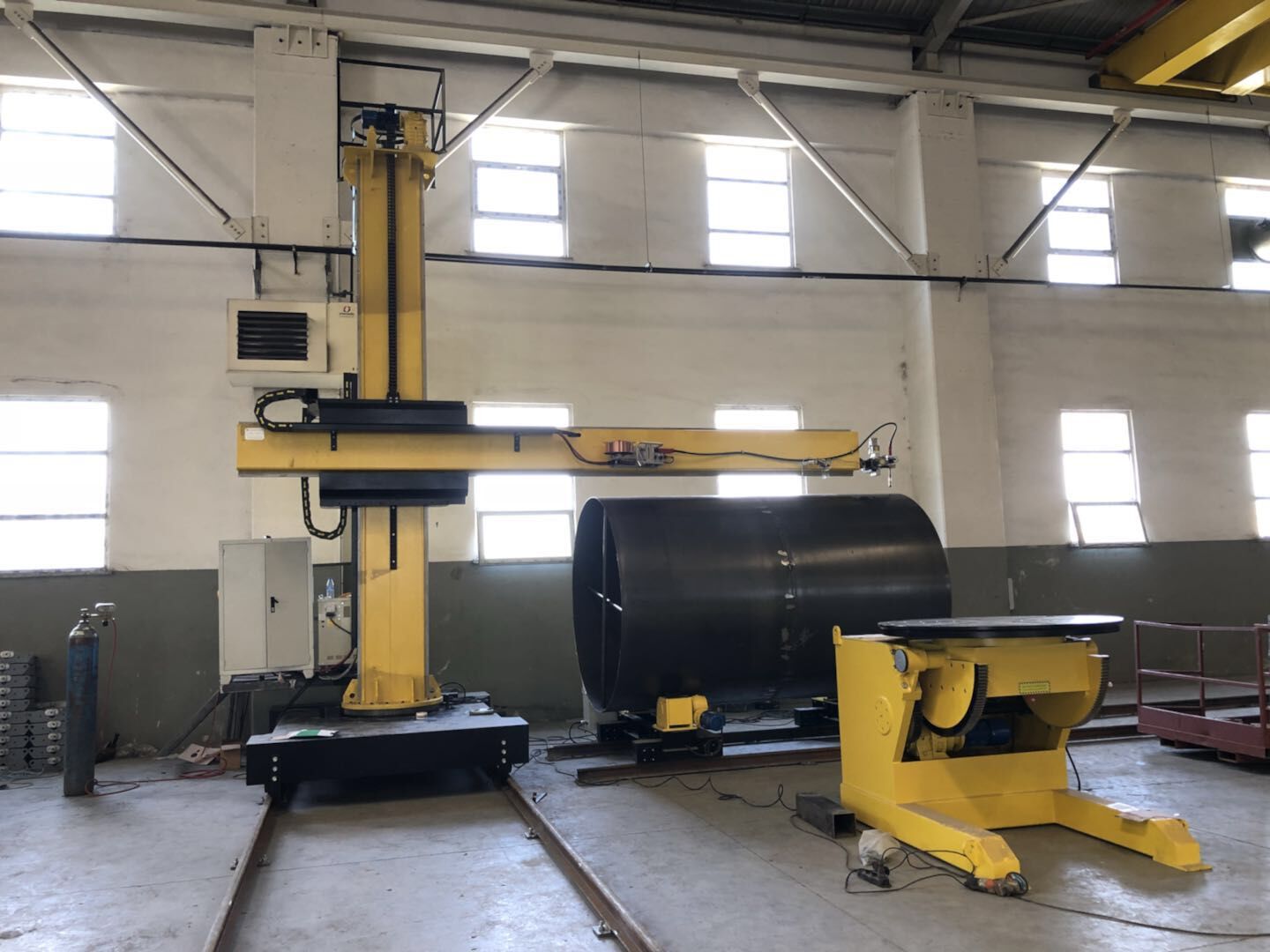
Q23: What Wuxi ABK equipment supports Cr-Mo welding? Cell A configuration (HGZ rotator + LH manipulator + HBJ positioner + ZHGK precision fit-up) + integrated preheat monitoring + parameter logging + Digital Twin traceability for PWHT documentation.
Q24: How does Digital Twin help Cr-Mo fabrication? Real-time capture of preheat + interpass + welding parameters + PWHT thermal cycle + operator sign-offs + inspector reviews — comprehensive documentation supporting ASME AI + PED Notified Body review; enables data-driven adjustment if hardness or defect trends observed.
Q25: What productivity gain from automation vs manual Cr-Mo? Automated SAW for Cr-Mo pressure vessel typically 25-35% higher productivity than manual + 99%+ RT pass rate vs 85-92% manual; PWHT documentation automation reduces paperwork burden 40-60% for AI/NB audit.
Summary
25 practical FAQ on Cr-Mo alloy steel welding (P22/P91/P92/T22/T91/T92) covering grade family + application (P22 medium-temp legacy; P91 CSEF enhanced 620°C; P92 tungsten-enhanced newer) + preheat (P22 150-200°C + P91 200-250°C) + filler metal (E9018-B3 for P22 + E9015-B9 for P91 + dissimilar transition) + PWHT (P22 690-730°C + P91 narrow window 750-770°C + AC1 avoidance critical) + hardness control (HV 250 typical + Vickers + PWHT correlation) + Type IV creep cracking (P91/P92 long-term service concern + design + PWHT mitigation) + NDE (visual 100% + RT/UT 100% + hardness + PMI critical) + Wuxi ABK equipment integration (Cell A + preheat monitoring + Digital Twin PWHT documentation + 25-35% productivity gain vs manual + 99%+ RT pass rate). Applications refinery hydrocracker + power boiler USC + Section VIII Div 2 (per Batch 31 #4) + SMR Cell K nuclear supply chain (per Batch 33 #1). Wuxi ABK Machinery equipment Cell A configuration + Digital Twin + Machine Vision QI + comprehensive parameter logging supports Cr-Mo P22/P91/P92 fabrication + documentation chain for ASME AI + PED Notified Body + Chinese SEI + client engineer review.
Contact: jan@weldc.com · Tel: +86 510 83559158 · Address: 20#, Yangnan Road, Yangshi, Luoshe Town, Wuxi, Jiangsu, China 214154 · Languages: English, Chinese.
Last updated: 2026-07-18.